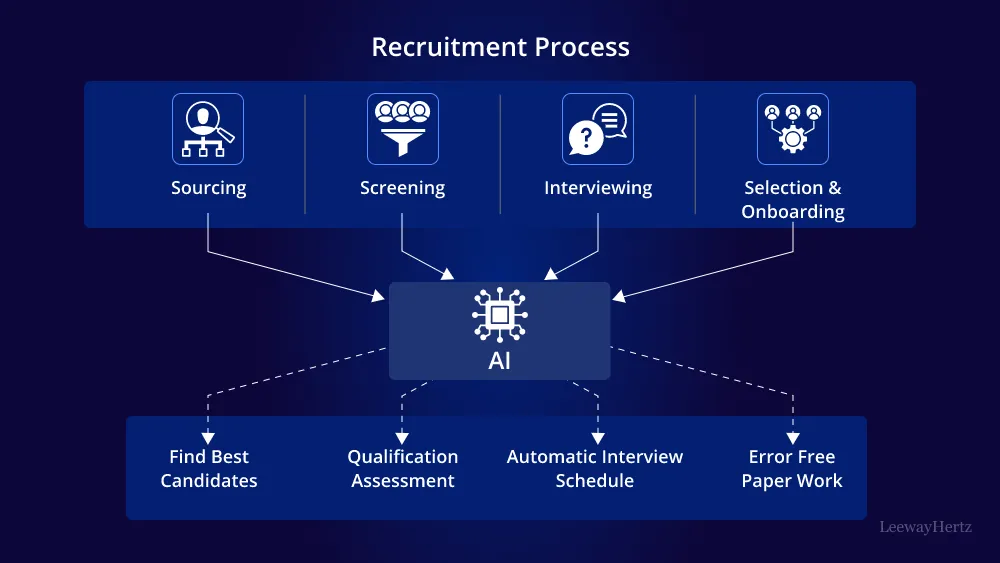
AI in HR Processes: How Automated Recruitment Tools and AI for Employee Onboarding Are Changing the Game
AI in HR processes is no longer sci-fi—it’s here. From machine learning and natural language processing (NLP) to predictive analytics, AI transforms how organizations hire, onboard, and manage people. If your HR team has ever felt buried under a mountain of résumés, think of this as their lifeboat.
We’ll explore:
How automated recruitment tools speed up hiring and improve quality.
How AI for employee onboarding can boost retention and accelerate productivity.
This isn’t just another tech piece—it’s a data-backed, engaging guide from résumés to retention (without the cringe moments of The Office).
Section 1: What Is AI in HR Processes?
Once upon a time, HR meant paper forms, sticky notes, and endless spreadsheets. Then came basic HRMS systems, which made life easier. Today, AI in HR processes is taking the spotlight, offering intelligent automation and predictive insights.
Core AI Technologies:
Machine Learning (ML): Detects patterns in résumés and performance data—think of it as a digital talent detective.
Source: TalentHR BlogNatural Language Processing (NLP): Parses résumés, analyzes sentiment in feedback, and powers chatbots that answer HR questions in seconds.
Source: Betterworks MagazinePredictive Analytics: Forecasts turnover, skills gaps, and hiring needs—like a crystal ball for HR.
Source: Betterworks Magazine
Main Goals of AI in HR:
Efficiency: Automate repetitive tasks to free up time.
Objectivity: Reduce bias in hiring decisions.
Data-Driven Decisions: Let analytics guide HR strategy.
AI transforms HR from a paperwork hub into a strategic powerhouse when integrated into daily workflows. For a broader overview of automation in different departments, see Implementing AI in Business (link to be inserted).
Section 2: Benefits of Leveraging AI in HR Processes
AI delivers more than just time savings—though that’s significant.
1. Time & Cost Savings
Automating résumé screening, interview scheduling, and FAQs can reduce recruiter workloads by up to 40%. Imagine an assistant who never takes coffee breaks.
Sources: WhiteCrow Research, TalentHR Blog
Also see AI Automation for Small Business (link to be inserted).
2. Enhanced Candidate & Employee Experience
AI chatbots offer 24/7 support, and personalized onboarding paths make employees feel valued—like Netflix recommendations for career growth.
Source: IBM Think
3. Reduced Unconscious Bias
Consistent algorithmic screening promotes diversity and compliance, avoiding the “I just liked their vibe” trap.
Source: WhiteCrow Research
4. Data-Powered Strategic Insights
Workforce analytics support headcount planning and skills mapping, acting as Google Maps for talent.
Source: Betterworks Magazine
For help calculating ROI and budgeting for these tools, check out The Cost of AI Automation Guide (link to be inserted).
Section 3: Deep Dive — Automated Recruitment Tools
Automated recruitment tools are AI platforms designed to reduce the manual hiring workload.
Key Functions:
Résumé Parsing: NLP extracts and standardizes candidate data—no more copy-pasting.
Candidate Matching: ML ranks applicants against job criteria, like Tinder for jobs.
Automated Outreach: Sends interview invites and follow-ups without manual scheduling.
Chatbot Screening: Answers candidate questions and conducts initial interviews 24/7.
Benefits in Action:
Faster time-to-hire
Higher candidate quality through better matching
Streamlined communication between recruiters and candidates
Popular tools include Greenhouse, Lever, and HireVue, which combine these features with analytics dashboards for real-time insights.
Section 4: AI for Employee Onboarding
Onboarding bridges hiring and productivity—and AI can make it stronger and faster.
Core AI Onboarding Features:
Personalized Learning Paths: Tailor training modules to each role.
Virtual Assistants: Provide new hires instant answers on policies, benefits, or workflows.
Progress Tracking: Monitor onboarding completion rates and flag delays.
Impact on HR Metrics:
Shorter ramp-up time for new hires
Improved first-year retention
Higher employee engagement scores
Companies like Workday and BambooHR now integrate AI onboarding assistants that guide employees from day one.
Section 5: Future Trends & Considerations
AI in HR is evolving quickly. Expect advances in:
Emotion AI is used to understand employee sentiment during interviews and surveys.
AI-driven career mapping to align personal goals with company needs.
Integration with other enterprise tools for a seamless employee lifecycle experience.
Ethical Considerations:
Maintain transparency in AI decision-making.
Audit algorithms to ensure fairness.
Comply with evolving data privacy regulations.
Conclusion
AI in HR processes is more than a productivity boost—it’s a strategic enabler for hiring and retention. Organizations can create a faster, fairer, and more engaging HR experience by combining automated recruitment tools with AI-powered onboarding.
The companies that adopt AI thoughtfully will not only fill positions faster but also build stronger, more diverse teams—setting themselves apart in the future of work.


