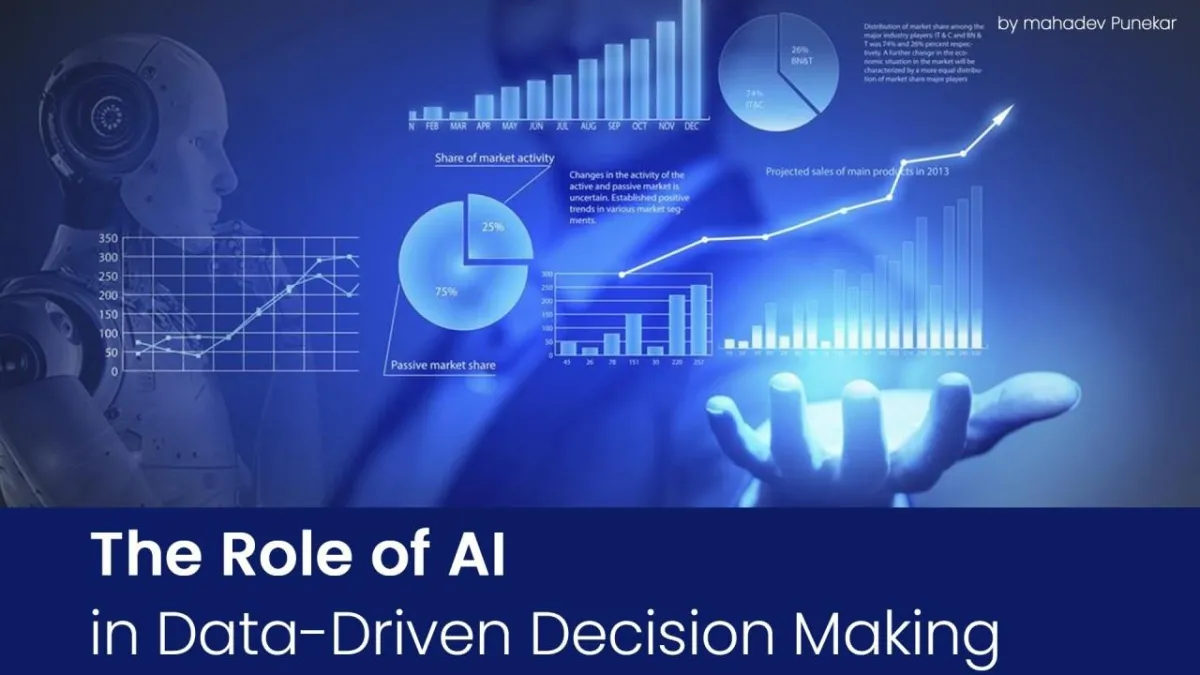
AI for Predictive Analytics and Data-Driven Decisions
Introduction
Data is the new oil—but only if you know how to refine it. Artificial Intelligence (AI) for data analysis transforms mountains of raw numbers into actionable insights. By leveraging AI-driven analytics, small businesses can make faster, more accurate, and cost-effective decisions without drowning in spreadsheets.
In this blog, we’ll explore predictive analytics tools, case studies, and strategies for overcoming challenges—helping you unlock the full potential of AI in data-driven decision making.
For more AI solutions tailored to smaller organizations, check out our guide on AI tools for small business (link to be inserted).
Section 1: Why AI for Data Analysis Matters
Small enterprises face unique challenges: limited resources, lean teams, and the constant need to compete with bigger players. AI-powered analytics tools close that gap by:
Speeding up insights – AI processes vast datasets in minutes.
Improving accuracy – Machine learning models detect trends humans miss.
Boosting KPIs – Businesses using AI analytics report up to 50% improvement in decision-making speed (source: IBM Think).
Want to explore broader tools for smaller organizations? See our overview of the best AI software for SMEs (link to be inserted).
Section 2: Key Benefits of Predictive Analytics Tools
Predictive analytics isn’t about gazing into a crystal ball—it’s about using AI to forecast outcomes. Benefits include:
Demand Forecasting – Optimize inventory and reduce waste.
Customer Retention – Predict churn and act before customers leave.
Financial Planning – Identify revenue risks with precision.
For more strategies beyond analytics, see our blog on AI solutions for small enterprises (link to be inserted).
Section 3: Choosing the Right Predictive Analytics Tools
The right tool depends on your needs:
For beginners: Low-code platforms like Tableau AI Analytics.
For scalability: Oracle AI Analytics.
For transparency: IBM Think.
Tip: Start with pilot projects before scaling.
Section 4: Real-World Applications
AI-driven analytics is already transforming industries:
Retail: Demand forecasting to avoid stockouts.
Healthcare: Predictive models for patient readmission.
Finance: Fraud detection via anomaly detection.
Tool example: Microsoft Azure ML deployed at the point of care (source: Oracle AI Analytics).
Impact: Better patient outcomes, lower costs, and fewer frantic phone calls from worried families.
For additional inspiration, see our AI automation case studies collection (link to be inserted).
Section 5: Overcoming Challenges in AI-Driven Analytics
Even the best AI for data analysis can hit roadblocks. Here’s how to overcome them:
Data Privacy and Compliance
Implement encryption and strict access controls.
Adopt privacy-by-design and run regular audits.
Skill Gaps
Upskill your team.
Use low-code platforms or vendor training programs.
Legacy System Integration
Connect old software to AI via APIs or middleware.
Roll out in phases to minimize disruption.
Mitigation Tactics:
Leverage prebuilt AI models.
Pilot before scaling.
To complement this, read our guide on streamlining operations with AI (link to be inserted).
Section 6: Future Trends in AI for Data Analysis
What’s next?
AutoML & Low-Code Analytics – Lowering barriers for non-experts (source: Oracle AI Analytics).
Explainable AI – Transparency for stakeholders (source: IBM Think).
Edge Analytics & Real-Time Insights – Powering IoT and supply chains (source: Oracle AI Analytics).
For a broader perspective, check our blog on AI tools for project management (link to be inserted).
Conclusion
AI for data analysis empowers small businesses to move from guesswork to strategy. From selecting predictive analytics tools to deploying AI models, every step pushes you toward more innovative, faster decisions.
If you’re ready to start, begin with a pilot project and measure ROI—because the future belongs to businesses that don’t just guess but know.
For a deeper dive, see our cost of AI automation guide (link to be inserted).
FAQs - Each blog includes an FAQ section at the end. If it doesn’t appear right away, please scroll down or use the navigation panel (View > Show Outline) to locate it.
1. What is AI for data analysis?
AI uses machine learning, NLP, and computer vision to process large datasets, uncover patterns, and generate insights. (source: IBM Think)
2. Why is data-driven decision-making critical?
It replaces intuition with data, improving KPIs and reducing bias. (source: Product School)
3. What are predictive analytics tools?
Platforms that forecast outcomes—like churn or demand—via ML and dashboards. (source: Tableau AI Analytics)
4. How do I choose the right tool?
Evaluate scalability, cost, and integration for your use case. (source: Oracle AI Analytics)
5. What are common implementation steps?
Prepare data, configure tools, train models, deploy, and monitor. (source: Oracle AI Analytics)
6. How do organizations overcome skill gaps?
Training, hiring data scientists, or adopting low-code platforms. (source: IBM Think)
7. What challenges exist in AI-driven analytics?
Data privacy, legacy integration, and resource constraints. (source: Oracle AI Analytics)
8. What future trends should I watch?
AutoML, explainable AI, and edge analytics. (source: Oracle AI Analytics)


